
By Ryan Cleek
Different Bikes Call for Different Shoots
Over the years, I’ve photographed and filmed electric bikes on everything from city streets and mountain trails to remote hunting and fishing locations. One of the things I enjoy about these assignments is how much the approach changes depending on the bike and who’s going to ride it.
A commuter e-bike calls for a different kind of photography than a high-performance e-MTB. The locations, riders, riding scenarios and even the pace of a video all need to make sense for the product.
Before picking up a camera, I want to know who the bike is for, how it’s meant to be used and what the brand needs from the finished photography and video. Those answers shape nearly every decision that follows.
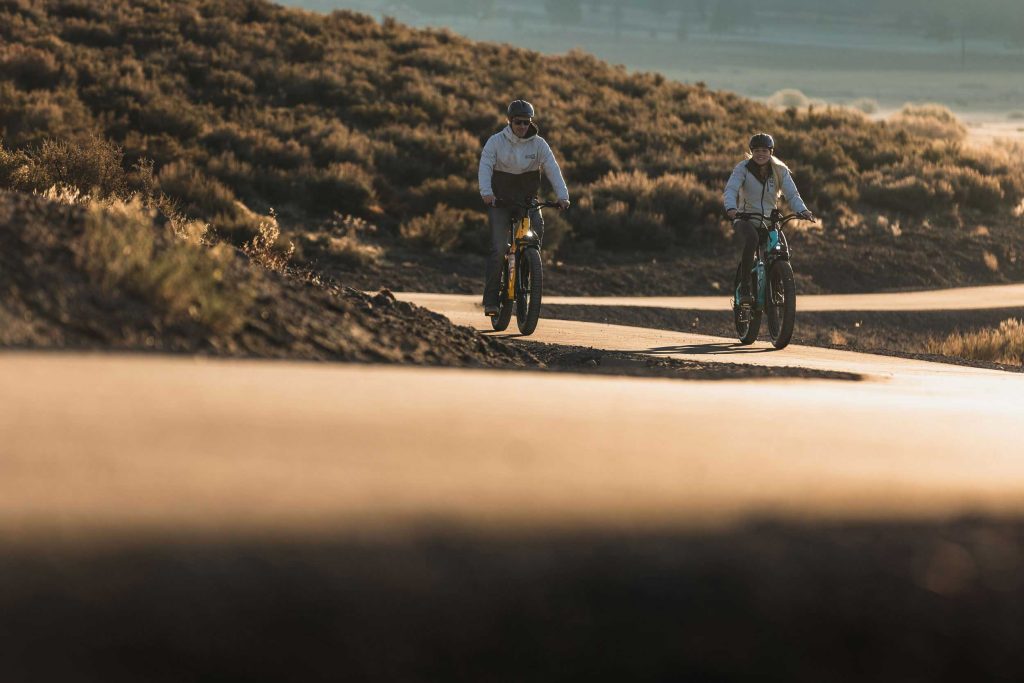
For a GoTrax F3 project in Lake Tahoe, for example, we used a mix of paved routes and dirt roads to photograph and film the fat-tire folding bike in different riding situations. The locations weren’t just backgrounds. They helped show how the bike could fit into someone’s everyday life.
Getting the Rider and Terrain Right
I’ve spent much of my career photographing mountain biking and other action sports, including working with riders I’ve known for decades.
Mark Weir is one of them. We’ve ridden and raced alongside each other, and I’ve photographed him throughout his racing career and on numerous commercial projects since.
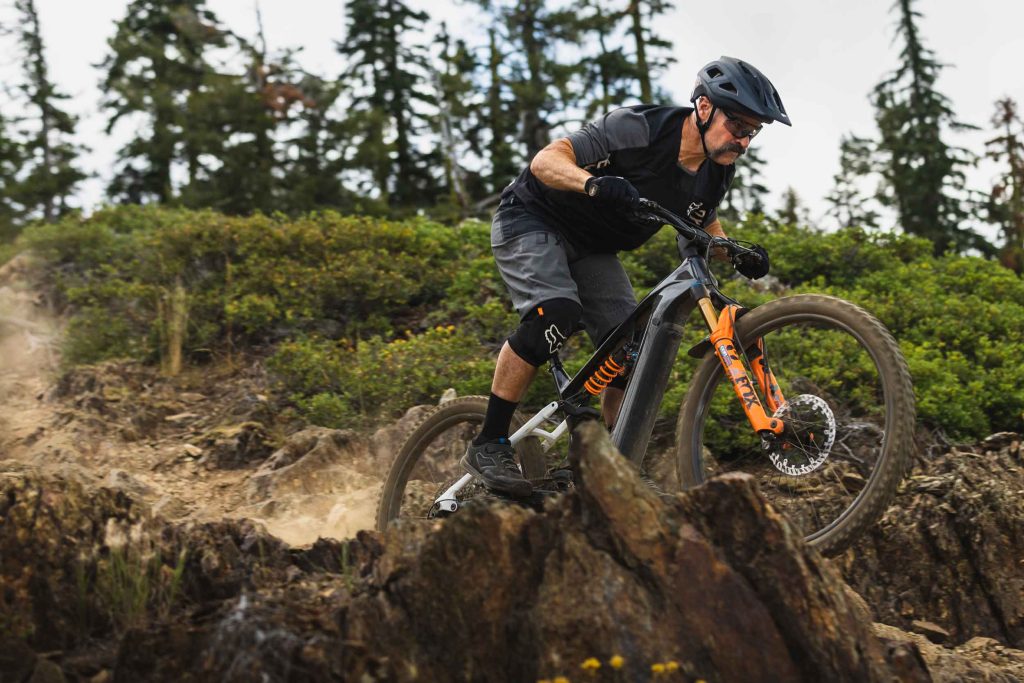
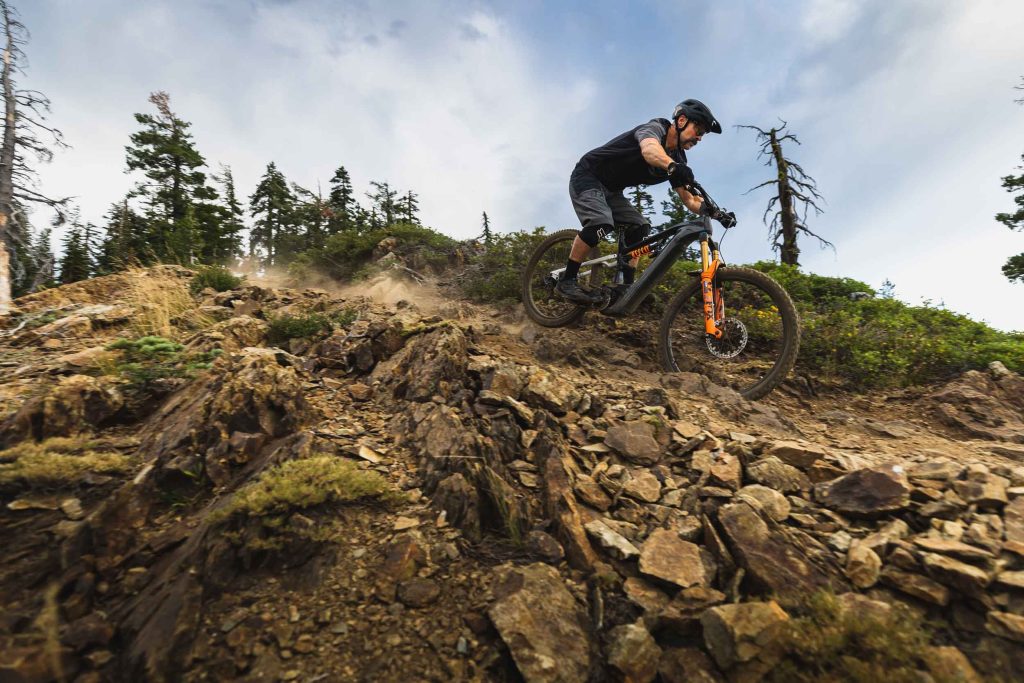
For a WTB e-MTB photography project, we headed into California’s Lost Sierra to photograph Mark on a Cannondale equipped with WTB’s e-MTB wheels.
Working with someone who knows the terrain and can ride at that level changes how I approach the shoot. Mark knows how to find his way through a technical section of trail. I can concentrate on the light, composition and timing that make the photograph work.
Of course, that isn’t the kind of rider every e-bike brand needs. A recreational or commuter bike may call for someone entirely different. What matters is that the person, bike and environment belong together.
A Great Location Isn’t Always the Right Location
EvLocation scouting is one of the parts of production I put the most time into. I’ve found plenty of beautiful places that simply weren’t right for the bike we were photographing.
For Velotric projects, including work with its Discover and Nomad lines, I look for terrain that fits the product and the type of riding the client wants to show. Sometimes that’s an accessible paved route. Other assignments call for dirt roads or more adventurous terrain.
Casting is just as important.
I organize casting calls around the riders a brand wants to reach, considering age, experience, appearance and how comfortable someone is on a bike. The goal isn’t simply to find people who look good on camera. They need to fit naturally into the riding scenarios we’re creating.
You can spend hours getting the light and framing right, but if the rider looks uncomfortable or the setting doesn’t make sense, the whole scene can feel staged.
Showing What the Bike Can Actually Do
An e-bike shoot needs to show more than a good-looking electric bicycle.
There’s the riding, of course, but there are also product details, features and practical uses that customers want to understand. I work those into the shot plan rather than trying to squeeze everything into a handful of action photographs.
For Dirwin, I’ve photographed e-bikes in hunting and fishing settings. That required more than finding a scenic trail and putting someone on a bike.
We put out casting calls for people with real fishing and hunting experience, then scouted locations that suited the activities and the bikes. I wanted the photographs to feel like a day someone might actually spend outside.
A fishing scene should feel like someone fishing, not a bike advertisement with a fishing rod added at the last minute.
The product still needs to be clearly visible. It’s a matter of finding the balance between showing the bike and showing why someone might want to use it.

Why the Planning Matters
A commercial shoot has to deliver more than a few strong images.
The client may need photographs for product pages, lifestyle imagery for a campaign, video for a launch and different versions for websites, advertising and social media. Those requirements affect how I plan the production.
When I’m handling both photography and video, I look for opportunities to make the most of each location and shooting day without compromising either medium. Some setups work for both. Others need their own time, lighting or approach.
That planning continues into post-production, where the photography and video need to work together while meeting their individual delivery requirements.
The more thoroughly we prepare, the more time we can spend concentrating on the actual photography and filmmaking once we’re on location.
From the First Brief to the Final Delivery
The more effort that goes into pre-production the better the end result. With projects for brands such as Velotric, my involvement often begins well before the cameras come out.
I work through the creative direction, scout locations, organize casting, build the shoot schedule and coordinate the production. From there, I’m behind the camera capturing the photography and video we’ve planned.
I also handle the post-production side, including photo editing and retouching, video editing, color work and preparing the final files for delivery.
Having that involvement from beginning to end helps me keep the finished work consistent with what we planned in the first place.
Not every assignment calls for the same scale of production. Some need a small, efficient crew and a focused shot list. Others involve multiple locations, talent and several days of filming and photography. The approach should fit the project rather than the other way around.
A Few Questions I Ask Before an E-Bike Shoot
There are a handful of things I want to work through with a client before production begins:
- Who is the bike designed for, and what does that person actually do with it?
- What terrain and locations best represent how the bike will be ridden?
- Do we need experienced riders, lifestyle models or people with a particular outdoor background?
- Which product details and riding characteristics are most important to show?
- Where will the finished photographs and videos be used, and what formats will be needed?
These aren’t complicated questions, but the answers have a big influence on the shoot.
It’s much easier to make those decisions during pre-production than to discover halfway through a project that we should have been somewhere else, photographing something different.

E-Bike Photography & Video Production That Fits the Brand
I’ve enjoyed watching electric bikes become part of so many different types of riding and outdoor recreation. From mountain biking and everyday transportation to hunting and fishing, the variety has led to some interesting assignments.
Each project brings its own challenges. That’s part of what keeps the work interesting.
For me, the goal is to come away with photography and film that show the bike in a way that feels believable to the people it’s made for, while giving the client the imagery they need for their marketing.
You can see more of my work in the RCP E-Bike Photography and E-Bike Video Production portfolios.
If you’re planning an e-bike product launch, photography campaign or video project, feel free to get in touch. I’m happy to hear what you have in mind.