
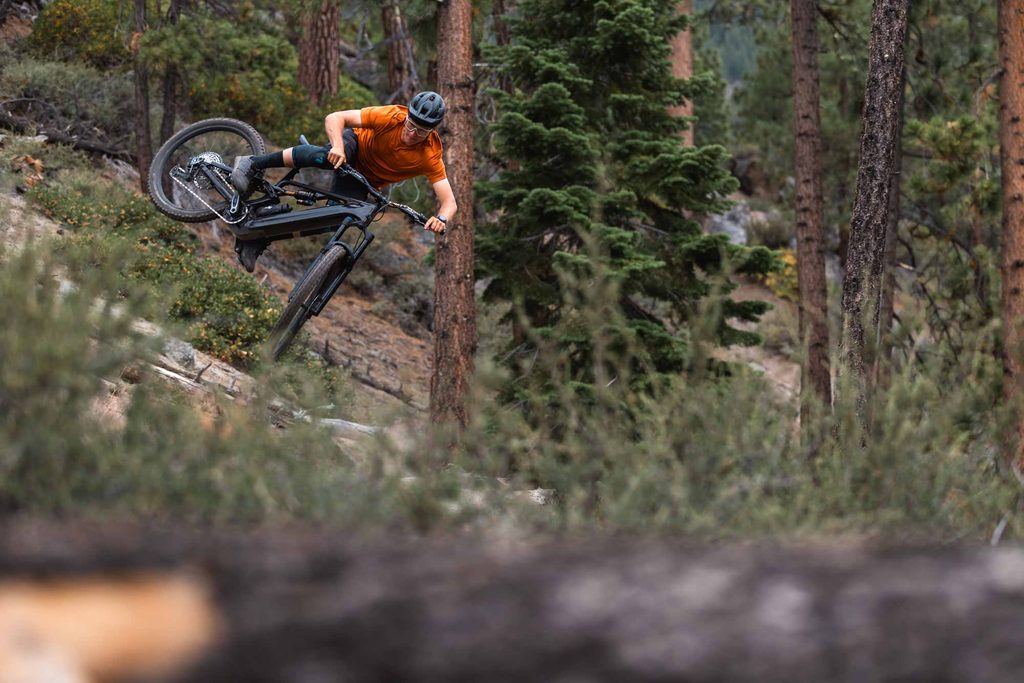
Professional e-MTB photography and mountain bike video production featuring the Specialized Levo, pro rider Treyton Maskaly and technical Lake Tahoe terrain.
By Ryan Cleek
There are plenty of ways to make an e-mountain bike look good on camera. Making it look right to experienced mountain bikers is harder.
For this independent project with pro mountain bike racer Treyton Maskaly, I wanted to make a short film and accompanying photography around his Specialized Levo in the Lake Tahoe mountains. The goal wasn’t to make a conventional bike edit or a string of beauty shots. I wanted the bike to live inside a simple mountain bike story: see a line, put in the work, then ride it.
The film starts with trailwork before much riding ever happens. That was intentional.
For riders who spend a lot of time in the mountains, building, maintaining and thinking about trails is part of the experience. It gave Treyton a reason to be there and gave the Specialized Levo a role in the story beyond simply being the product in front of the camera.
This short mountain bike film follows Treyton from digging, shaping, and reading the trail to riding fast, technical terrain in the Lake Tahoe mountains. It’s about earned speed, trail work, and what happens when the shovel gets put down and the ride begins. Starring Treyton Maskaly. Written, filmed, and edited by Ryan Cleek
Why E-Mountain Bike Video Production Has to Speak Mountain Bike First
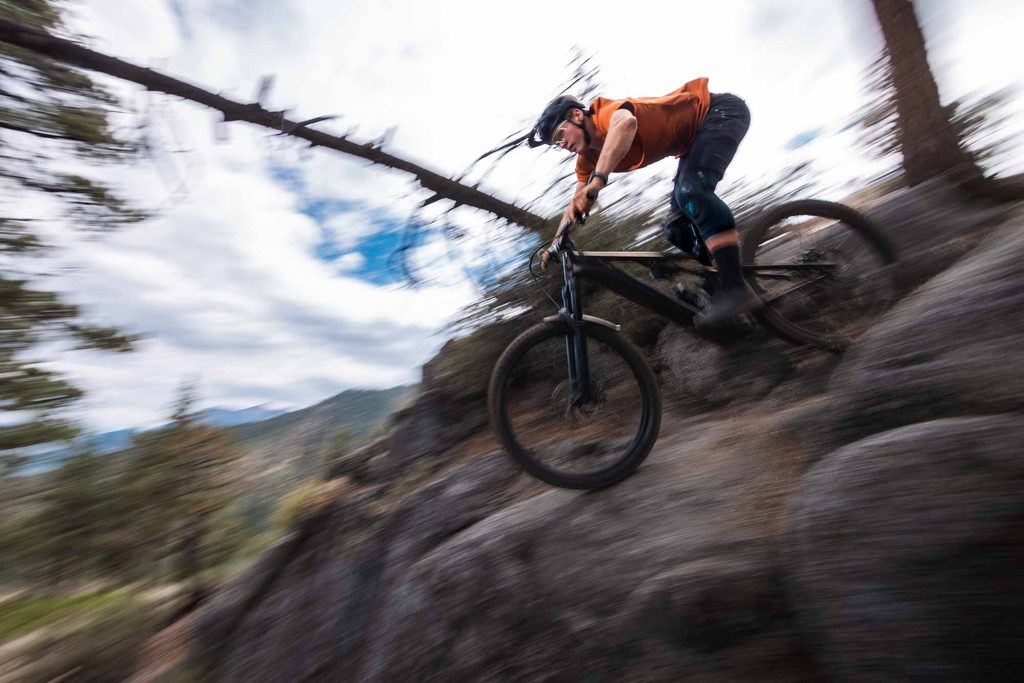
The e-MTB category has matured considerably. Bikes like the Specialized Levo are no longer interesting simply because they have a motor.
They are mountain bikes, and serious riders judge them accordingly. That changes how I approach e-mountain bike video production and photography.
A knowledgeable mountain bike audience is looking at the terrain, the rider, body position, speed, suspension behavior, line choice and how the bike moves underneath the athlete. Put an inexperienced model on technical terrain, over-direct the action or choose a trail that doesn’t match the capability of the bike, and core riders see it immediately.
I’ve spent most of my life riding, racing, photographing and filming mountain bikes, including years working at worldwide mountain bike magazines as a staff writer and photographer, and as the Lead Creative Producer at Specialized Bicycles. That background affects countless decisions on a shoot that have very little to do with operating a camera.
I know what a good rider looks like on the bike. I know when a corner will photograph well but look slow in motion, or vice versa. I know when a section will work for a long lens, when getting close with a wide lens will create more speed, and when a technically difficult trail feature isn’t going to translate visually at all.
Those details matter when a marketing or creative director is trying to make a high-performance e-MTB credible to people who actually ride.
The Specialized Levo Is a Mountain Bike. Shoot It Like One.
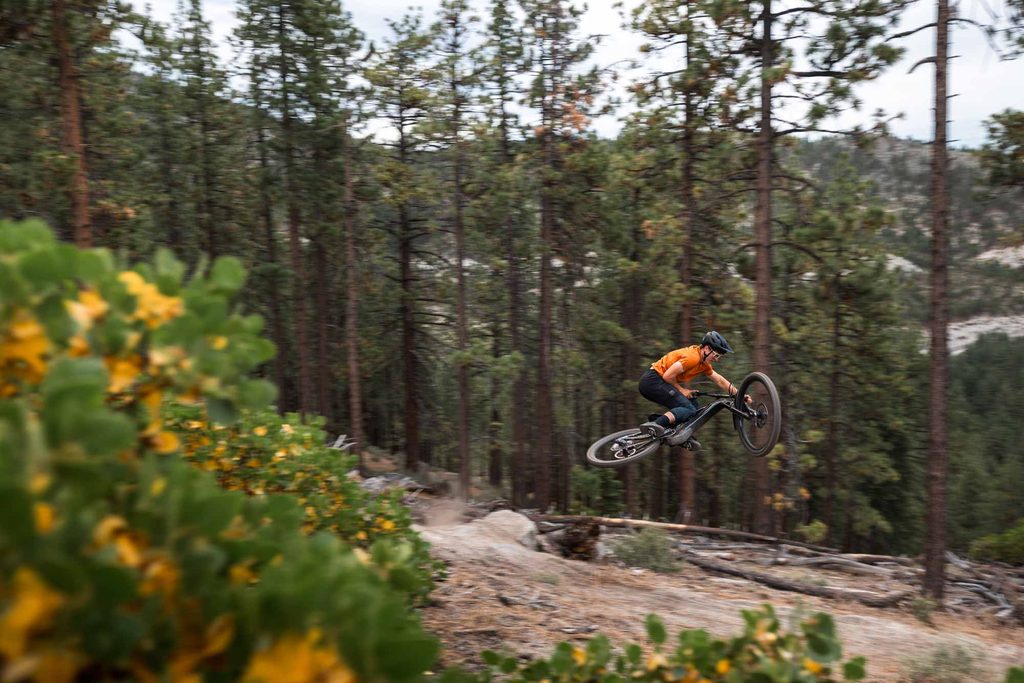
One of the mistakes I see in e-bike imagery is making the electric aspect of the bike the entire story. Before we know it, e-MTBs are just going to be called MTBs…
For certain products that makes sense. For a performance e-MTB like the Specialized Levo, I think it can sell the bike short.
The motor and battery expand what the rider can do, but once the trail points downhill, the bike still needs to look composed, fast and capable. The riding needs aggression. Suspension needs to be working. Tires need to be loaded. The terrain needs enough consequence to show why the bike exists.
At the same time, ignoring the uphill capability misses part of what separates an e-MTB from an analog bike.
That creates an interesting production challenge: show the advantages of the electric platform without turning the film into an obvious demonstration of pedal assist.
Technical climbing is much more useful to me than simply filming someone spinning up a fire road. A steep, rough climb can show traction, rider input, momentum and the ability to access terrain differently. Then the descending can take over and remind the viewer that this is still a serious mountain bike.
Good e-MTB marketing should be able to communicate both without beating the audience over the head with either one.
Building the Film Around Treyton Maskaly
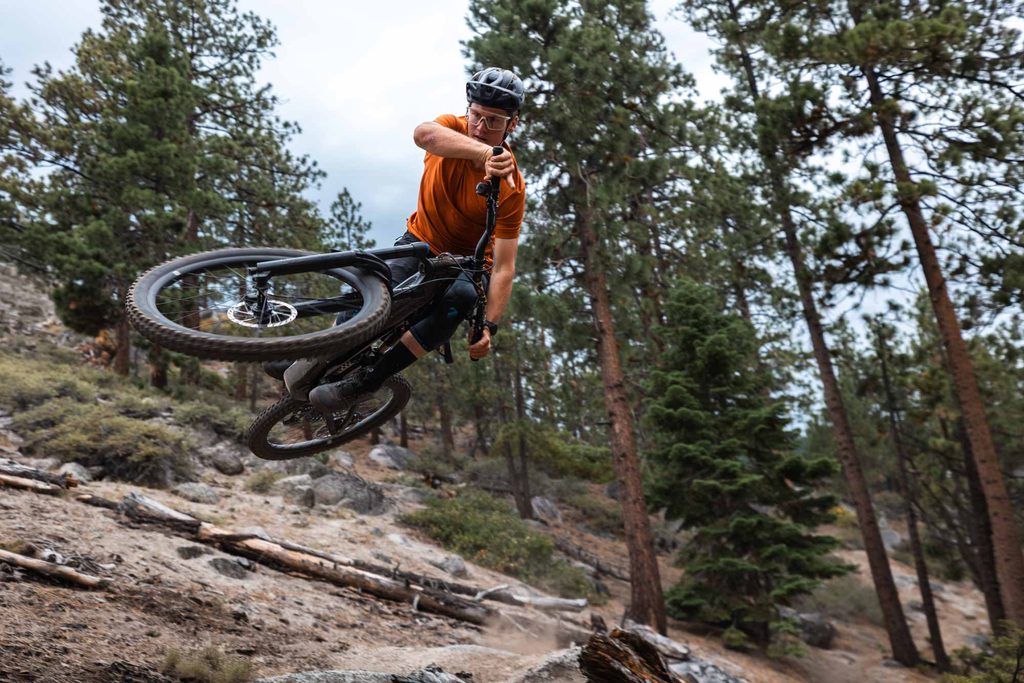
Casting is one of the most important parts of mountain bike production.
Treyton can ride at a level that opens up creative possibilities. Instead of compromising camera positions around what the talent is capable of doing, I can look at a piece of trail and decide what would make the strongest image or sequence.
That means asking for the same technical line repeatedly. Hitting a corner faster because the first pass didn’t load the bike enough. Changing an entrance to improve body position. Riding through changing light while I move from a telephoto composition to something much closer and wider.
High-level riders also understand why those repetitions matter. For this film, my job was to put the camera where his riding, the Levo and the terrain came together in the strongest way.
Why Lake Tahoe Works for E-Mountain Bike Production
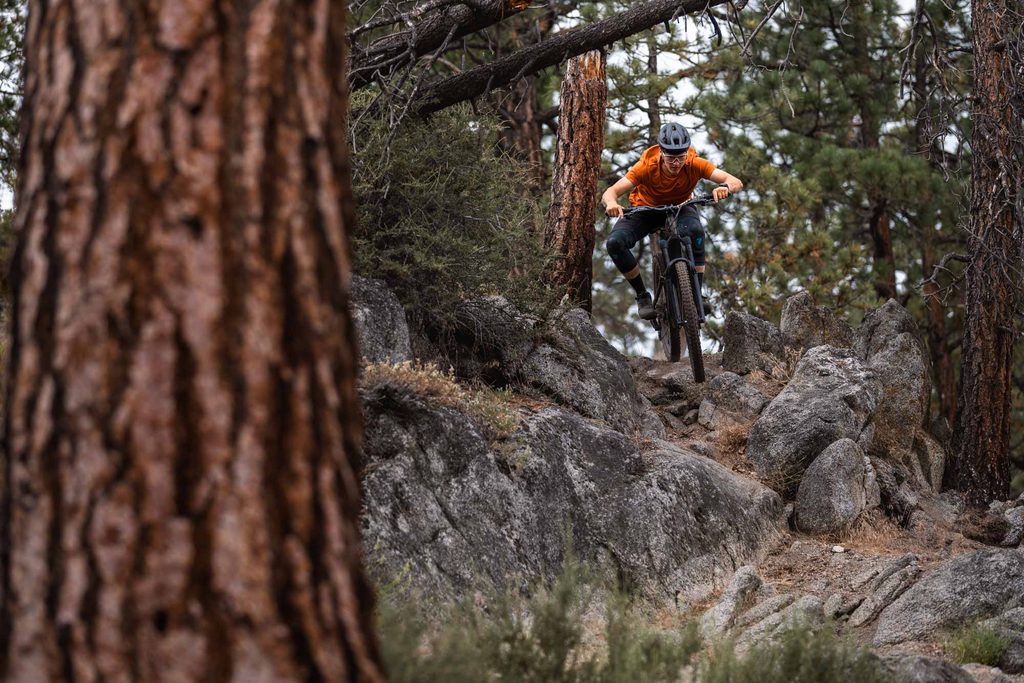
The Lake Tahoe region gives me an enormous range of mountain bike terrain within a relatively compact production area.
There is exposed granite, loose decomposed dirt, forest, technical rock, high-speed trail, steep climbing and big mountain scenery. More importantly, it is real riding terrain.
For an e-MTB production, that diversity allows us to show several sides of a bike without making the imagery feel as though we jumped between unrelated locations just to check boxes on a shot list.
A wooded climbing section can transition naturally into exposed technical terrain. A trailwork sequence can lead directly into riding the finished line. Wide establishing shots can place the rider in the Sierra landscape, while tighter action photography can concentrate entirely on the bike and athlete.
Location isn’t just a backdrop. It should help explain the product. For this Specialized Levo video and photo shoot, Tahoe gives me terrain that looks worthy of the bike’s capability.
Shooting E-MTB Action: Photography and Cinematography
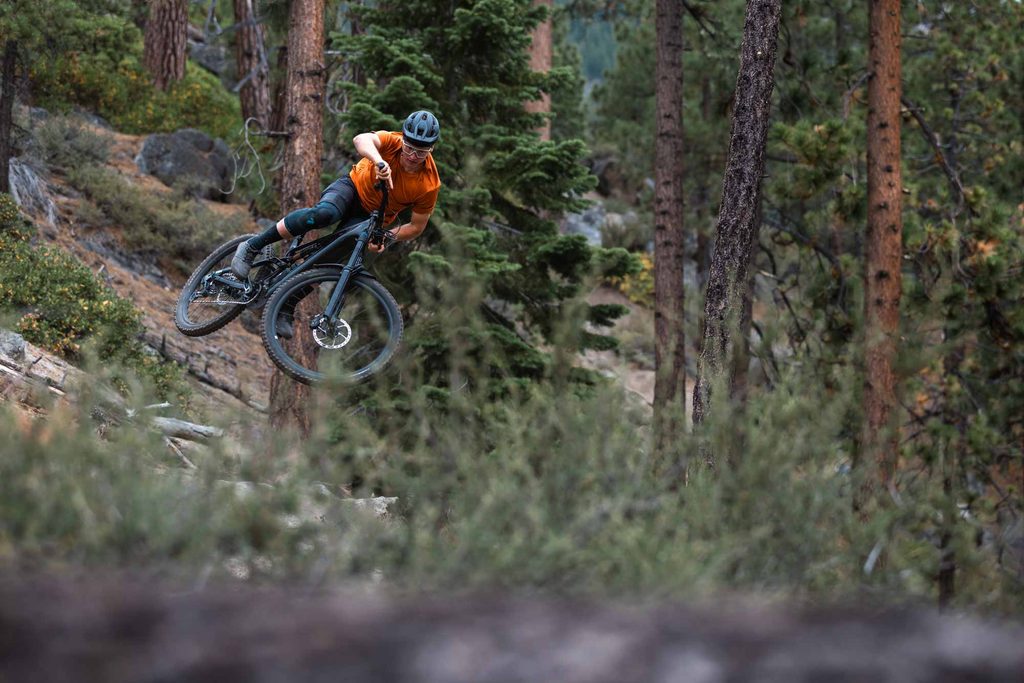
Mountain bike photography and filmmaking ask for different things. A strong photograph can tell a complete story in one frame. A film has to build that story over dozens to thousands of shots.
Every Shot Still Has to Work as a Photograph
My approach to cinematography, though, is very similar to how I approach photography. Every shot still needs strong composition, proper exposure, critical focus and a clear reason for the camera to be where it is. During this project, I told Treyton at one point that nearly every action shot we were filming could have worked as a strong still photograph.
That’s an important distinction for me. In my opinion, good cinematography isn’t just recording motion. Each shot should be strong enough to stand on its own, while also working as part of a larger sequence. That’s where cinematography starts to separate itself from simply capturing video.
At the same time, both a great still photograph and the money shot in a mountain bike film can come down to a fraction of a second.
I’m looking for where the rider’s position is strongest, where the suspension loads into the terrain, when a tire starts to break loose, where the bike separates cleanly from the background and where the light hits the rider at exactly the right point in the trail. At the same time, I’m constantly reading the terrain and looking for the most interesting setting, angle and backdrop for the shot.
Sometimes the best position for the cinema camera isn’t the best place for the still camera. When I’m shooting photos, I’m often kneeling or even lying on the ground to get the angle I want. I still tend to shoot low when filming, whether handheld or on a tripod, but the camera is usually a little higher than it would be for a still photograph.
That’s why simply pulling frames from a finished film isn’t a substitute for dedicated e-MTB photography.
For a commercial production, I want the photo and video assets to feel as though they belong to the same campaign while still taking advantage of what each medium does best.
That gives a brand a much deeper library to work with: hero film, shorter edits, vertical video, high-resolution action photography, environmental images, lifestyle moments and tighter bike details that can all share the same creative direction.
Making the Bike Visible Without Making Every Shot an Advertisement
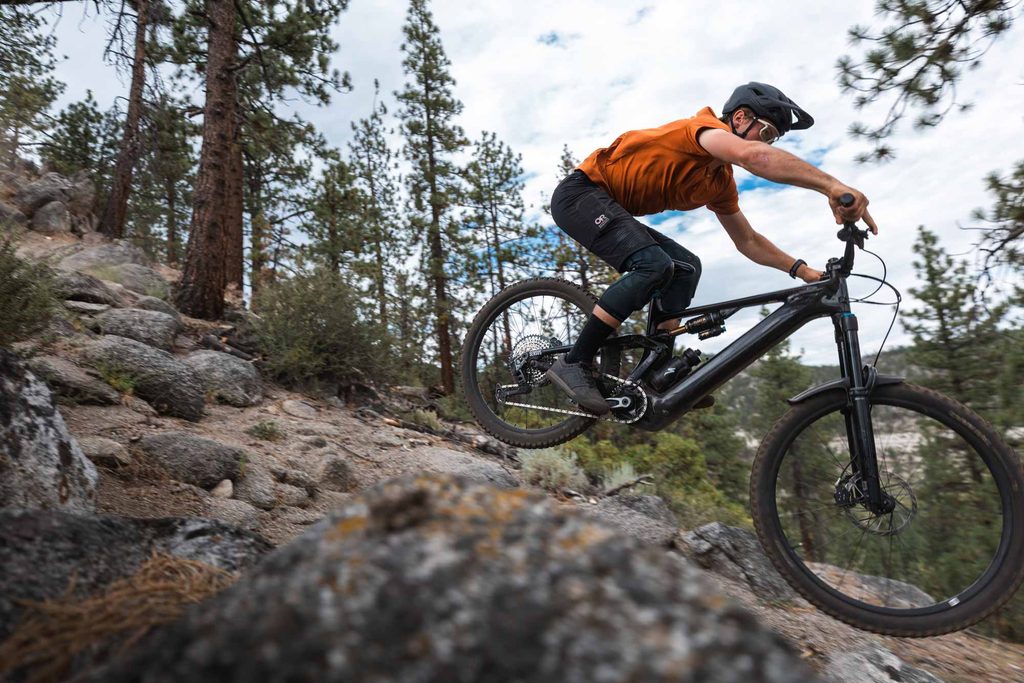
There is another balance I pay close attention to on bike projects: product visibility.
The bike needs to be readable. Frame position, lighting, background and rider posture all matter. A beautiful piece of riding isn’t particularly useful to a bike company if the frame disappears into shadow or the product is obscured in every frame.
But the opposite can be just as damaging.
If every camera position is obviously designed around presenting the logo to the viewer, the riding starts looking staged.
The strongest mountain bike photography and video usually lives somewhere between those extremes. The product is unmistakable, but the action still feels like something a rider would want to do even if no camera were there.
That’s especially important with the Specialized Levo. It already has strong recognition within the e-MTB category. The imagery doesn’t need to yell that it’s a Levo every second. The film needs to make the viewer want to be on the bike.
Story First, Then the Shot List
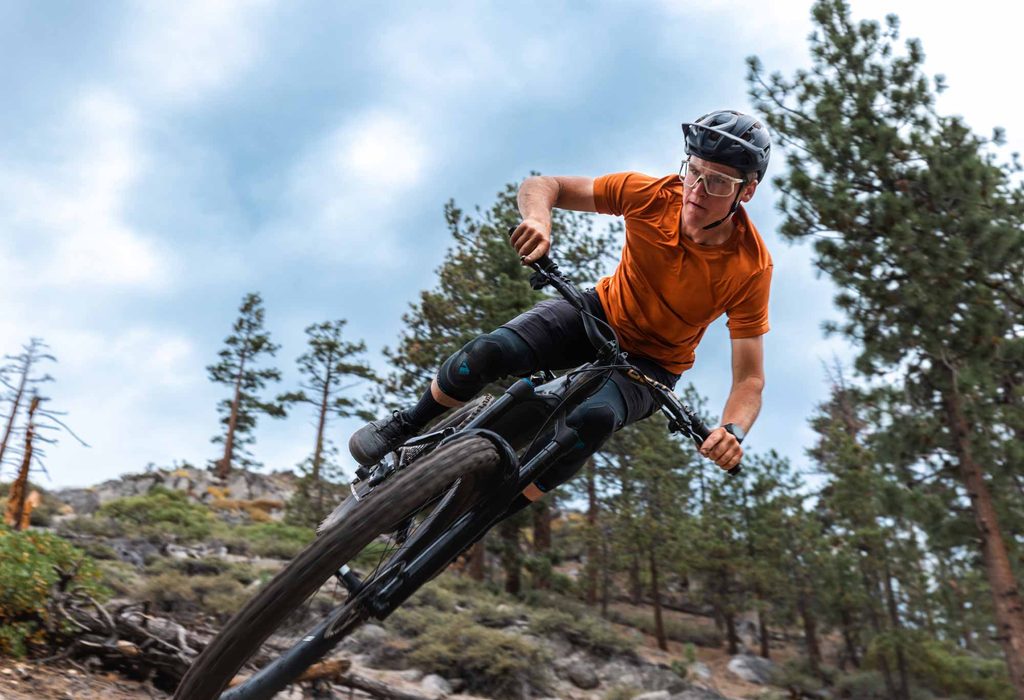
Mountain bike “shreddit” videos are fun, but in my opinion they’ve become so common that a lot of them start to feel disposable or interchangeable. Throughout my career, I’ve always tried to capture strong riding and action, but give it something more—a story, an idea or a reason for the viewer to stay with it. That’s been true whether I’m making a feature-length film, a commercial project or a short piece like this one.
The trail-building component gave this film something I think a lot of short-form bike marketing is missing: a reason for the riding.
Treyton wasn’t just standing at the top of a trail because the shoot schedule said it was time for an action sequence. The story had already established why this particular line mattered.
He saw it.
He worked on it.
Then he rode it.
That isn’t a complicated narrative, and it shouldn’t be. Mountain bike films don’t always need elaborate scripts to create an emotional connection.
Sometimes a small amount of context is enough to make the action mean more.
For a marketing director or creative director planning an e-MTB launch, campaign or rider film, that is worth considering. Product features still need to be communicated and deliverables still have specific jobs to do, but that doesn’t mean the final film has to feel like a product demonstration.
Give the rider a reason to ride and the bike a meaningful role in getting them there.
Featured by The Loam Wolf and Mountain Bike Action
After the film was released, both The Loam Wolf and Mountain Bike Action picked up the project, publishing the video along with photography from the shoot. It was good to see the film reach two established mountain bike outlets, especially because both speak directly to the kind of experienced MTB audience I had in mind when making it.
The Loam Wolf: Treyton Maskaly Rides Lake Tahoe | Specialized Levo eMTB Film
Mountain Bike Action: Specialized Levo eMTB Film | Treyton Maskaly Rides Lake Tahoe
E-Mountain Bike Photography and Video Production for Bike Brands
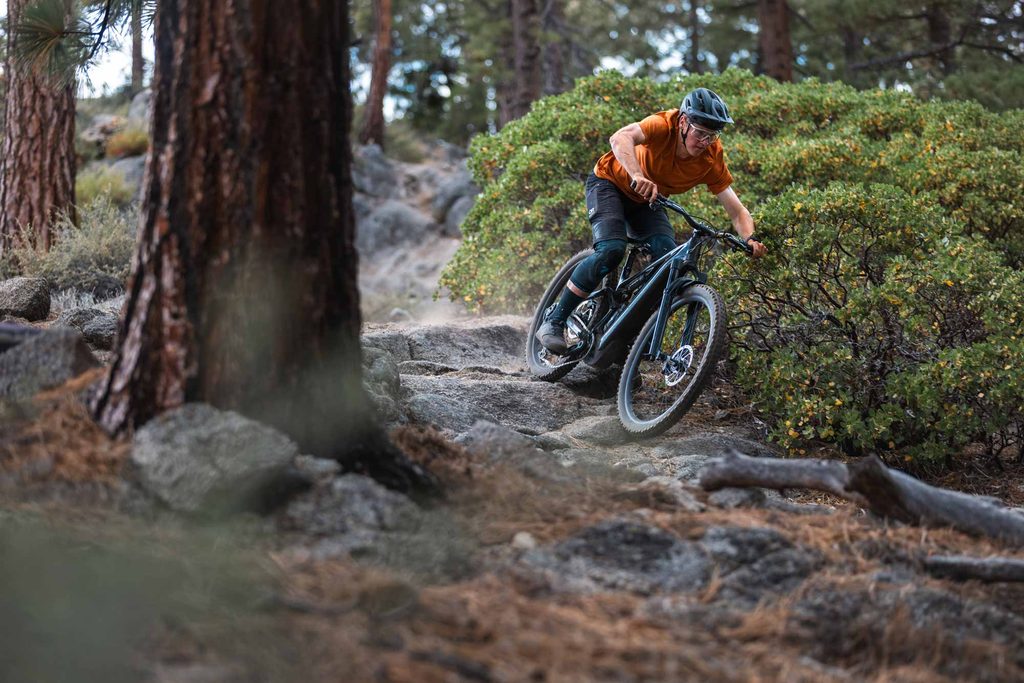
The Specialized Levo project is a good example of how I like to approach e-MTB production: start with real riding, work with elite-level athletes who look natural on camera and can genuinely show what the bike is capable of, choose terrain that complements the product, then build the photography and cinematography around those elements.
The camera work matters. So do the lighting, production, editing and sound.
But none of it can save a mountain bike film that doesn’t understand how real mountain bikers ride, what they notice and what actually feels credible to them.
Ryan Cleek Productions creates professional e-mountain bike photography and video production for bike brands, component manufacturers and outdoor companies. Projects can range from bike launches and complete commercial campaigns to athlete stories, product photography, social films and long-form filmmaking.
Based in Reno, we regularly shoot in the scenic and rugged Lake Tahoe region, but we also travel worldwide for projects as needed.
If you’re a marketing director, creative director or producer planning an e-MTB photography or video project, get in touch to discuss what you’re working on.